Wasps where you least want them
Every summer it’s the same story. The kids can’t use the play structure because of the nest under the slide. Wasps are pouring out of a gap in the siding beside the back door. Someone ran the lawnmower over a hole in the grass and found out the hard way that yellow jackets live underground.
Wasps are useful in the garden, but a nest beside a doorway, deck, pool or play area is a sting waiting to happen. The trick is knowing which kind you have and where the nest actually is, because that decides how it should be treated.
Know your wasp: the three you’ll meet in Bolton
- Yellow jackets are the small, bright yellow and black wasps that crash picnics. They often nest underground in old rodent burrows, or inside wall voids, sheds and attics. Late in the season they get very defensive.
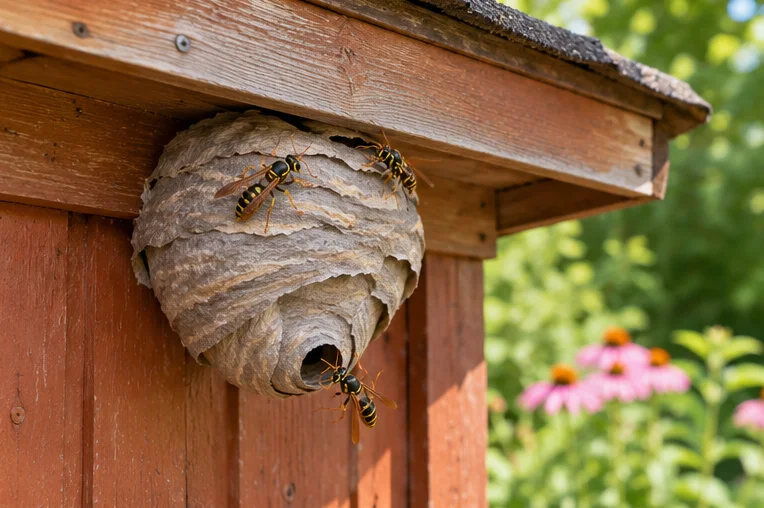
- Bald-faced hornets are black and white and build large, grey, papery nests hanging from trees, shrubs and eaves. The nests can grow to the size of a basketball, and the hornets will defend them hard.
- Paper wasps are slimmer, with long dangling legs, and build open, umbrella-shaped nests under eaves, railings, deck boards and barbecue lids. Usually less aggressive, but often right where people are.
Bees are different again. Honey bees and bumble bees are important pollinators and usually calmer. If what you are seeing looks more like bees than wasps, tell us. A local beekeeper may be the right call for a honey bee swarm.
Why late summer is the worst
A wasp nest starts in spring with a single queen. By August and September it can hold thousands of workers. At the same time their natural food supply shifts, and they go hunting for sugar: pop cans, fallen fruit, barbecues and garbage bins. That’s when stings spike.
The best time to deal with a nest is early, when it’s small. If you see wasps going in and out of the same spot in June, don’t wait for it to become a problem in August.
Please don’t do this yourself
We understand the temptation to grab a can of spray at dusk. But some nests are genuinely risky to tackle on your own:
- Nests inside walls or ceilings. Plugging the hole can drive wasps inside the house instead.
- Ground nests. You can’t see how big they are, and stepping close sets off the whole colony.
- High nests. Ladders and angry hornets are a bad combination.
- Large hornet nests. Bald-faced hornets defend in numbers and can sting repeatedly.
If anyone in your household has a known allergy to stings, keep them well away from the nest. If someone has trouble breathing or swelling of the face or throat after a sting, call 911.
How wasp nest removal works
- Find the nest. We watch the flight path to locate where the wasps are going in and out, which is not always where they’re most noticeable.
- Treat it directly. The product goes into or onto the nest itself, so the colony is dealt with at the source.
- Remove it where practical. Exposed nests can often be taken down once they are inactive. Nests sealed inside walls may be left in place, since they are not reused.
- Advise on prevention. We point out gaps and sheltered spots that could attract a new queen next spring.
Expect to see a few wasps returning for a day or so after treatment. Foragers who were out come back to the nest and are dealt with as they return. Don’t block the entrance during that time.
Nests on decks, play structures and pools
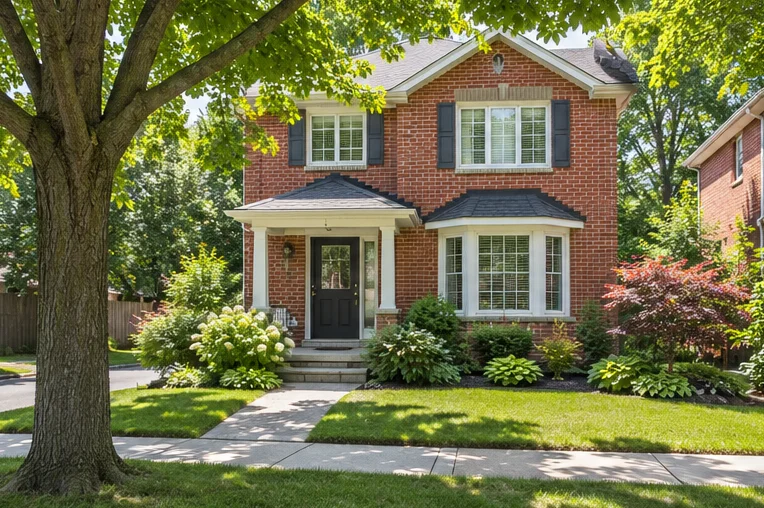
Some of the most common nests we see are in the places families use most: under deck boards and railings, inside the hollow tubes of swing sets and play structures, beneath pool decks and in the folds of patio umbrellas and barbecue covers.
These nests often go unnoticed until someone puts a hand right on them. A quick look under railings, steps and play equipment every couple of weeks in early summer will help you spot a nest while it’s still small.
Wasps around restaurants, patios and shops
For businesses with outdoor seating, garbage areas or open doors, wasps can drive customers away fast in late summer. Keep waste bins lidded and emptied often, clean up spills quickly, and have nests near entrances or patios dealt with as soon as they are spotted. Ask about timing the visit around your opening hours so customers are not disturbed.
Making your yard less inviting
- Check eaves, sheds, play structures and under deck railings in May and June, when nests are small
- Seal gaps in siding, soffits and around vents before spring
- Keep garbage, recycling and compost bins closed
- Pick up fallen fruit and cover drinks and food outdoors
- Fill old rodent holes in the lawn, which yellow jackets love to move into
Seeing something bigger than a wasp coming and going from the roofline? It may be a squirrel. Our wildlife removal page explains what to look for.