That noise in the attic isn’t the house settling
Bolton is surrounded by forest, ravines and the Humber valley, so it’s no surprise that raccoons and squirrels treat local neighbourhoods as an extension of their habitat. Most of the time that’s fine. It stops being fine when one of them decides your attic, chimney or crawl space is a better den than a hollow tree.
The sound often tells you who it is:
- Heavy thumping or walking at night usually means a raccoon.
- Quick scurrying and rolling sounds in the morning and late afternoon points to squirrels.
- Light scratching inside walls at night is more often mice. See our mouse and rat control page.
- Chirping or squeaking from one spot in spring can mean babies, which changes how the job has to be done.
Raccoons: strong, clever and determined
Raccoons can tear open soffits, lift loose shingles, rip off roof vents and pull apart chimney caps. Once inside an attic they flatten and soil insulation, and they often set up a latrine in one corner. Under decks and sheds, they dig out dens and can bring a family back year after year.
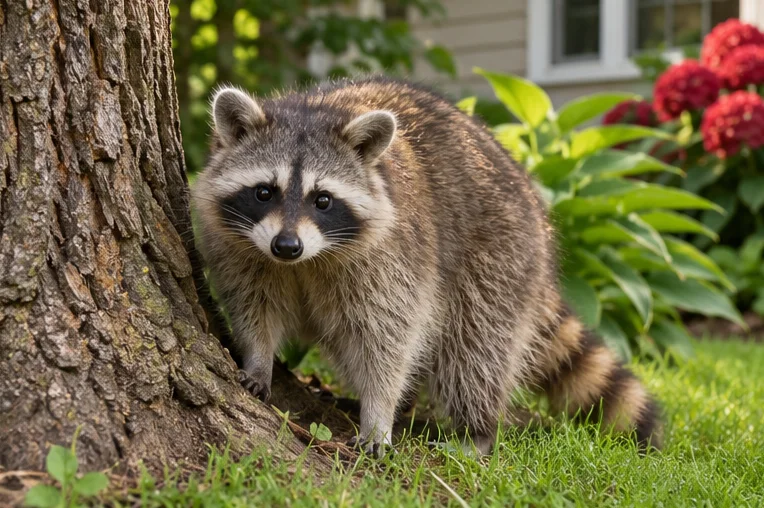
Raccoons and skunks can carry rabies in Ontario. Never corner, feed or try to handle one, and keep pets indoors if an animal is behaving strangely or seems unafraid. If someone is bitten or scratched, wash the wound well and contact a doctor or public health right away.
Squirrels: small teeth, big repair bills
Grey and black squirrels chew through soffit corners, roof vents and the gaps where rooflines meet. Inside, they shred insulation for nests and sometimes chew electrical wiring, which is a genuine fire risk. Red squirrels are smaller but just as persistent.
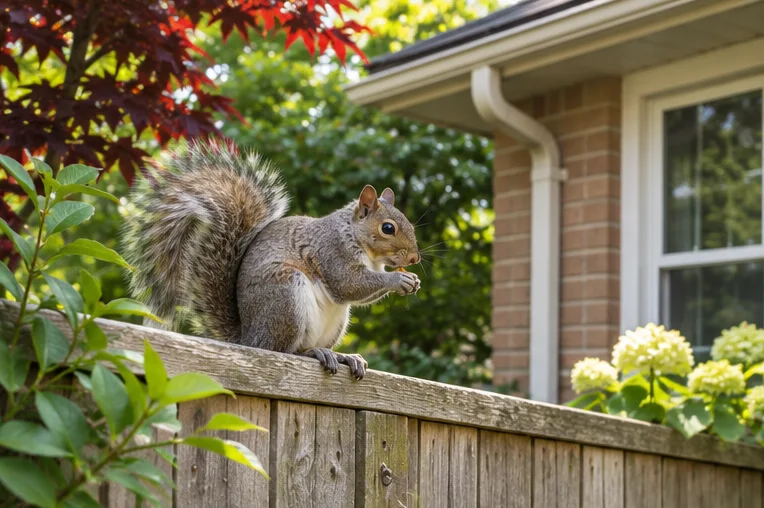
Squirrels usually have litters in early spring and again in late summer, so timing matters when you are dealing with a squirrel in the attic.
Why trapping and relocating isn’t the answer
Many people’s first idea is to set a cage trap and drive the animal out to the countryside. In Ontario, that’s not allowed. Under provincial rules, wildlife that is live-captured must be released within one kilometre of where it was caught, so it can find its usual food and shelter rather than fighting for new territory.
Practically, that means an animal moved down the street can simply come back to the same hole. And in spring and summer, trapping an adult can leave babies orphaned inside your walls. The lasting fix is exclusion: getting animals out through a controlled exit and making sure they cannot get back in.
How wildlife removal works
- Inspect the whole building. Roofline, soffits, vents, chimney, deck and foundation. Animals often have more than one way in.
- Check for young. From spring into summer, babies may be inside. They need to be accounted for before anything is sealed.
- Install a one-way exit. A one-way door lets animals leave to feed but blocks their way back in.
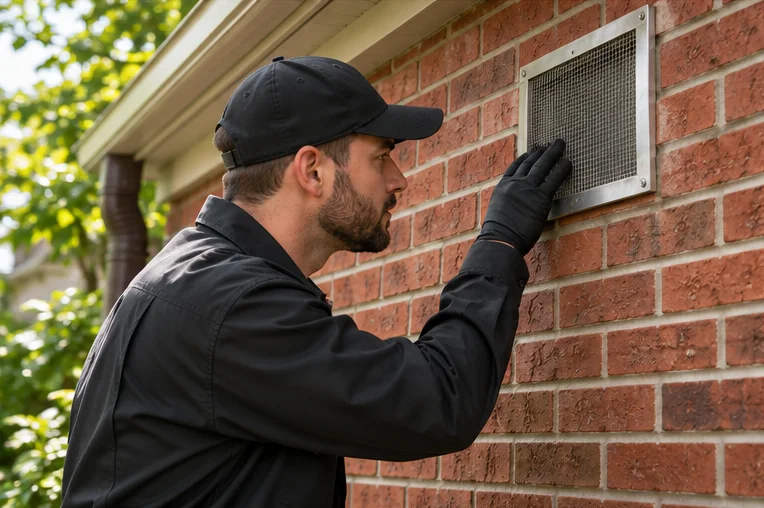
- Seal and protect. Once the space is empty, the entry point and other weak spots are secured with heavy-gauge screening, vent guards and chimney caps.
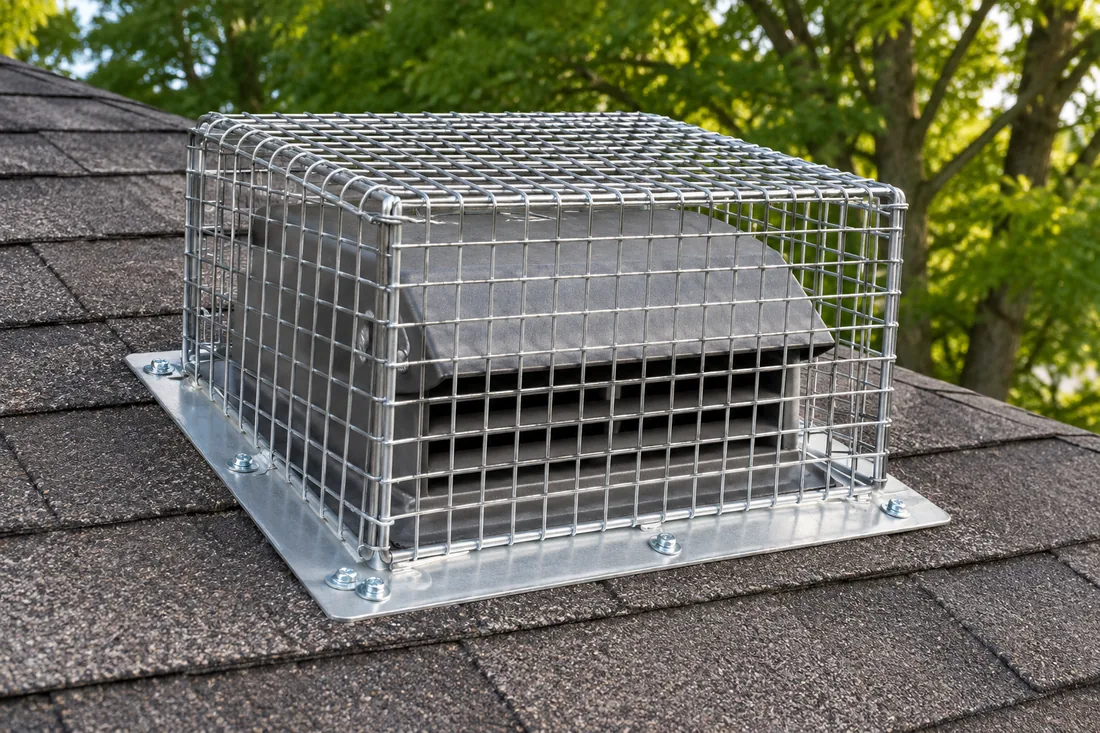
Closing an opening while an animal is still inside is the most common mistake we see. It leads to more damage as the animal tries to escape, or worse, an animal dying in the wall. Sequence matters.
Other animals we get asked about
Skunks under decks and porches, birds nesting in dryer and bathroom vents, groundhogs under sheds. If something is living where it shouldn’t be, call and describe it. We will tell you whether it’s something we can help with and what the options are.
Signs an animal has moved in
- Bent or torn roof vents, soffit corners pulled down or shingles lifted
- Chew marks around the edges of holes in the roofline
- Muddy paw prints or greasy rub marks on siding, downspouts or the chimney
- Insulation pulled out of a gap, or nesting material sticking out of a vent
- A strong ammonia or musky smell in an upstairs room or closet
- Fresh digging under a deck, porch, shed or concrete steps
Cleaning up after wildlife
Once animals are out, there can be a mess left behind: flattened or soiled insulation, nesting material and droppings. Raccoon droppings in particular can carry roundworm eggs that are harmful to people, so latrine areas should never be swept up by hand without protection.
Wear gloves and a mask, avoid stirring up dust, and bag everything carefully. For heavily soiled attics, the insulation may need to be replaced. We will tell you what we found and what we recommend.
Make your home less tempting
- Use bins with locking lids, and put them out the morning of collection rather than the night before
- Bring pet food in at night and clean up under bird feeders
- Trim tree branches back from the roof
- Fit a proper chimney cap and keep vent covers in good repair
- Block the space under decks and sheds with buried mesh once you know it’s empty