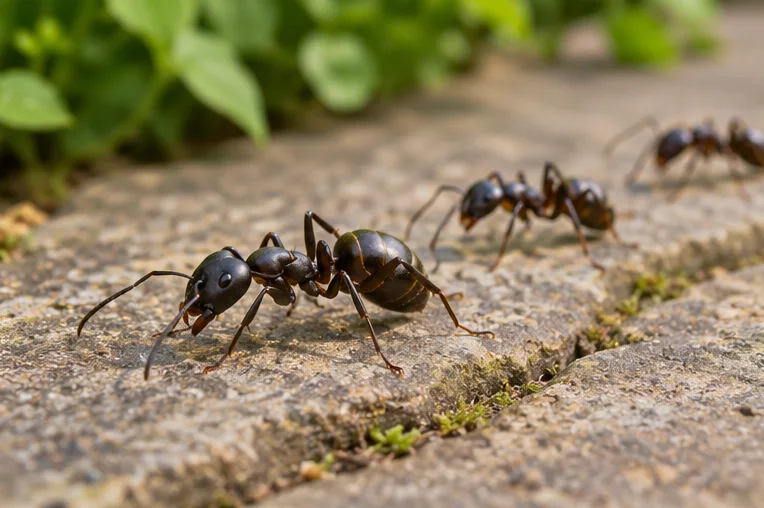
Ants marching across the counter again?
You wipe the trail away in the morning and by lunch it’s back, a neat line of ants heading for the sugar bowl or the dog’s dish. Spraying the ones you can see feels productive, but it barely touches the colony, which could be under the patio, inside a wall or in a soft piece of wood somewhere you never look.
Effective ant control means finding which ant you have and where the colony is, then using a treatment that gets back to it. The type of ant changes everything.
Carpenter ants: the ones to take seriously
Carpenter ants are the large black ants you often see in spring. They don’t eat wood like termites, but they hollow it out to build nests, and they prefer wood that’s already damp or softened. In Bolton homes we often find them around leaky window frames, decks, sill plates, roof leaks and trees touching the house.
Signs to watch for:
- Large black ants indoors, especially in spring, sometimes with wings
- Small piles of fine sawdust-like material, called frass, below wood trim or in the basement
- A faint rustling inside a wall or window frame on quiet nights
- Ants coming and going from a gap around a window, door or deck
Because carpenter ants follow moisture, treatment works best when it is paired with fixing the damp wood or leak that attracted them.
Pavement ants and other kitchen invaders
The small dark ants marching across your floor in early summer are usually pavement ants. They nest under driveways, patio stones and foundations and come inside looking for food. They’re a nuisance rather than a structural threat, but they can arrive in big numbers.
For pavement and other small ants, baits are often more effective than sprays. Workers carry the bait back and share it through the colony, while many sprays only kill the foragers and can push a colony to split and spread.
Cockroaches in homes and businesses
Cockroaches are less common in detached Bolton homes than in the city, but we do see them, usually German cockroaches brought in on grocery boxes, second-hand appliances or furniture. In businesses, commercial kitchens, restaurants and anywhere with warmth, moisture and food are the usual hot spots.
You might spot them scattering when you turn on a light at night, or notice small dark droppings that look like pepper in cupboard corners and behind appliances. Cockroaches breed quickly, so call early. Treatment usually combines gel baits in cracks and crevices, monitoring traps and a cleanup plan for the spaces they hide in.
Spiders, centipedes, earwigs and silverfish
These are the crawling insects people find in basements, bathrooms and around the edges of rooms. Most are harmless, but nobody wants to share a shower with a house centipede.
- Spiders follow their food. Lots of spiders usually means lots of other insects, so we look at what they are hunting as well as the spiders themselves.
- House centipedes love damp basements and bathrooms. Drying the space out is half the fix.
- Earwigs and sowbugs come in from damp mulch and gardens next to the foundation, often after rain.
- Silverfish feed on paper, glue and starches in humid storage areas, closets and bathrooms.
Bolton’s river valley setting and older basements can mean higher humidity, which all of these insects enjoy. A dehumidifier, better ventilation and moving mulch back from the foundation often help as much as any treatment.
Flying ants in spring
Seeing winged ants inside the house in spring can be alarming. These are swarmers, the reproductive ants that leave a mature colony to start new ones. If they are appearing indoors rather than just outside, it often means a well-established nest is inside the walls, floor or roof.
Collect one or two in a bag or take a clear photo. It helps us tell whether you are dealing with carpenter ants or a smaller species.
Bugs in the pantry
Small moths fluttering in the kitchen, or tiny beetles in the flour, are pantry pests, not crawling insects from outside. They come in with dry goods like flour, rice, cereal, nuts and pet food, and multiply in open packages.
- Check every dry food package, including spices and birdseed, and throw away anything infested
- Vacuum shelves and corners, then wipe them down
- Store food in sealed glass or hard plastic containers
- Buy smaller amounts if you don’t use something often
If they keep coming back after a thorough clean-out, call us and we will help track down the source.
What to expect from treatment
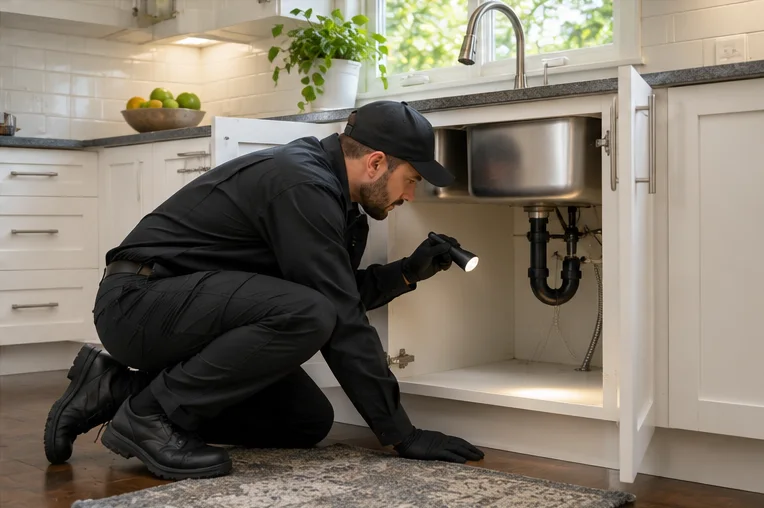
- Identify the insect and where it is living, inside and out.
- Choose a targeted treatment to suit the pest and your home, such as baits, crack-and-crevice treatment or exterior perimeter work.
- Fix what attracted them: moisture, food sources, gaps and clutter near entry points.
- Follow up where needed, because some insects take time to clear completely.
Please avoid spraying store-bought insecticide before we arrive. It can scatter ants, hide the trail we need to follow and make baits less effective.
Insects flying in and out of a gap near the roof or deck are more likely wasps. See wasp and hornet removal.